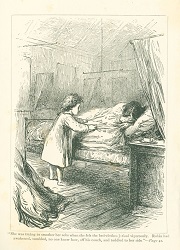
Yes, the sun was keeping holiday and pouring down right genially and right lovingly his happy rays on the earth. Impartial, as betokens all true sovereignty, was this king of day; no idea he had of favoring the rich more than the poor. Had this not been his invariable and unexceptionable rule, it is highly probable that Mrs. Timbs, of Blind Alley, Spitalfields, London, would have been left, if not in darkness, yet in considerable fog and obscurity.
Mrs. Timbs had given birth an hour ago to her sixth son and tenth child, and she herself was just preparing to take holiday, the first holiday she had had for years. Supposing a choice to have been given her, she might have preferred to slave on a little longer; but it was not to be; she was about to stop working from morning to night, and almost from night to morning again: she was about to stop feeling hungry and cold; she was going away to a better place than she had ever known before; in short, Mrs. Timbs was going to die.
The sun, impartial and kind, struggled through the dusty window, and lay in two golden bars on the pillow. One of these grand bars of light took the new-born baby's red face into its embrace and glorified it, the other warmed the dying mother's cheek. Patty and Molly, the two elderly girls, aged respectively thirteen and fourteen, stood by the side of the bed; the sun's rays did not touch them; they stood in shadow, fit emblems of the long and dusty bit of road they had to tread before they could look for rest and a holiday, poor things!
Seven other children played happily in the court below. The father was at work and would not be back before evening. When the neighbor, who with officiousness but much kindness had been going in and out of the room, saw that death was really close at hand, she bent over the woman, and asked her if she would not like to say good-bye to the little 'uns outside?
Source Project Gutembert eBook of Outcast Robin